- Tyres a key component in achieving world record
- Rolling resistance around 25 percent below threshold for EU tyre label’s highest
class A rating - Record-breaking drive from Wolfsburg to Vienna: consumption of just 7.51 kWh per
100 km including charging losses, or 6.89 kWh per 100 km excluding charging losses - Continental also supplies original equipment tyres for ID. Polo production model
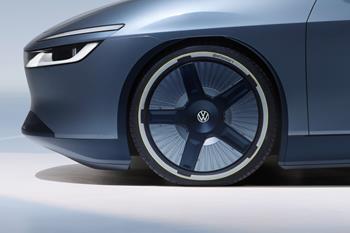
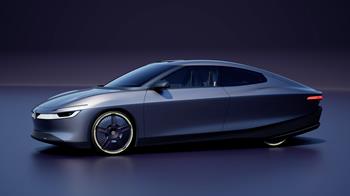
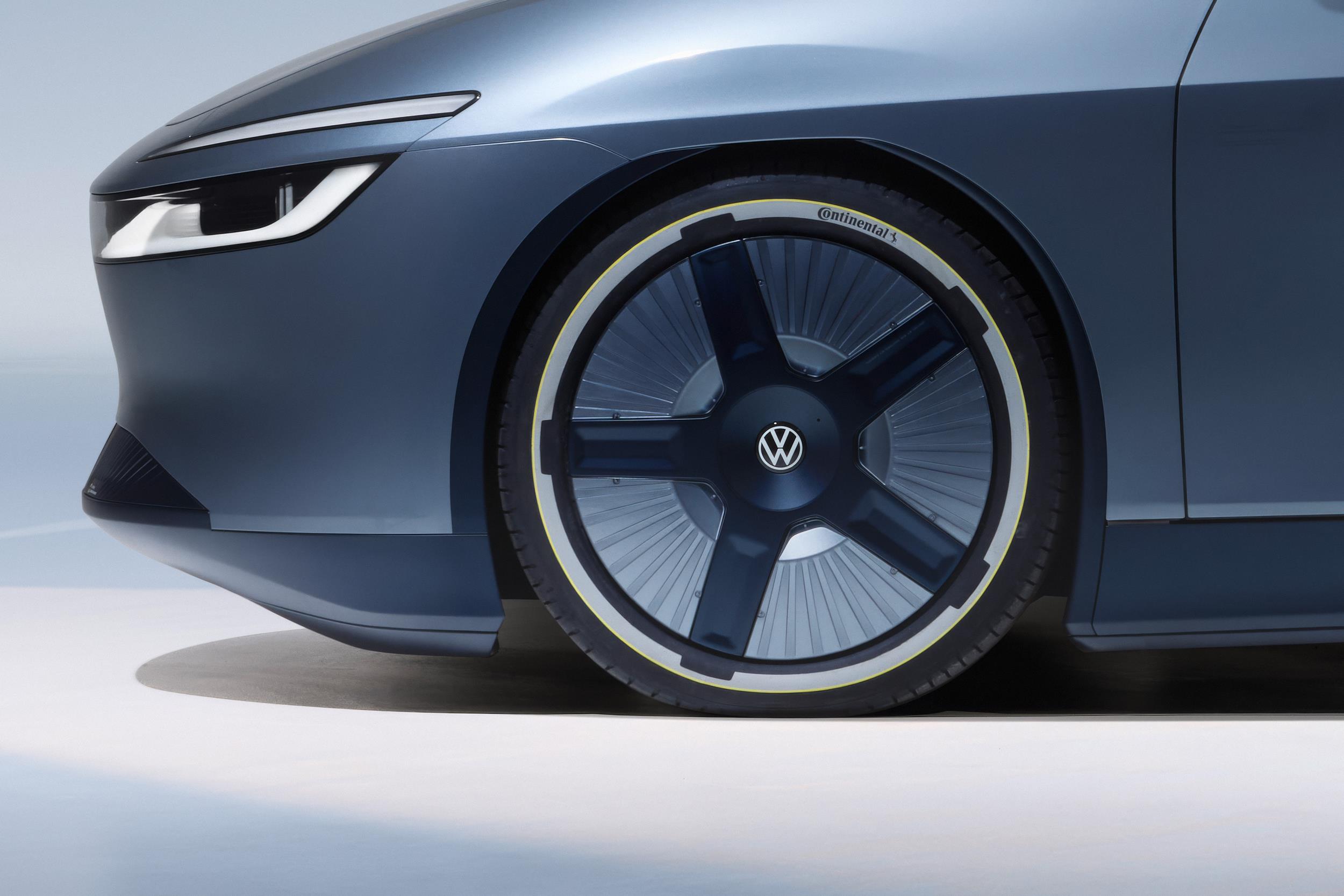
Hanover, Germany, October 19, 2026. Continental made a decisive contribution to the world record set by Volkswagen’s Mission Efficiency concept vehicle with a specially developed concept tyre. During the record-breaking drive, the world’s most efficient near-production electric vehicle consumed just 7.51 kilowatt-hours of electricity per 100 kilometres including charging losses, or 6.89 kWh per 100 km excluding charging losses. The record was officially certified by RID – Rekord-Institut für Deutschland on August 24, 2026, following a 1,278.36-kilometre journey from Wolfsburg to Vienna under real-world conditions. The trip required only one charging stop and concluded with 164 kilometres of remaining range. Continental’s concept tyre achieves a rolling resistance of 4.9 kilograms per metric ton, around 25 percent below the threshold for the EU tyre label’s highest class A rating. Since around 20 percent of an electric vehicle’s propulsion energy is used to overcome tyre rolling resistance, this is a key factor in increasing vehicle range.
“The record shows that increasing the range of electric cars does not necessarily require larger batteries. Significant opportunities lie in the successful interaction of all vehicle components. Tyres make a crucial contribution,” says Dr. Christian Strübel, Continental’s expert in rolling resistance for passenger car tyres. “Together with Volkswagen, we’ve demonstrated what’s possible when vehicle, aerodynamics and tyre development are aligned from the very beginning.”
Rolling resistance: a key factor in driving range
Tyres play a central role in the efficiency of electric vehicles. Their properties have a direct effect on energy consumption and therefore on the range achieved on a single battery charge. This is due to rolling resistance. With every revolution, the tyre deforms where it contacts the road surface. This deformation consumes energy that would otherwise be available for propulsion. Around 20 percent of an electric vehicle’s battery energy is used just to overcome this resistance. In other words, the lower the rolling resistance, the greater the range from the same battery charge.
This is precisely where Continental focuses its tyre development. The concept tyre is based on the EcoContact 7, which already offers exceptionally low rolling resistance as a production tyre. For the record-breaking drive, the tyre was modified according to Volkswagen’s specifications. The result is a tyre that deforms even less as it rolls, further reducing energy consumption and increasing the range per battery charge.
What sets the record-breaking tyre apart
Two components are particularly important for achieving low rolling resistance. First, the sidewall follows the same design principle used in the EcoContact 7 production tyre, providing stability without increasing rolling resistance. Second, the tread compound has been specially tailored to the tyre’s other components. Together with the carcass and tread pattern, it helps minimise the energy losses generated as the tyre rolls.
A key additional advantage comes from a new manufacturing process. During production, the initially soft green tyre is hardened in a mould under heat and pressure – a process known as vulcanisation. In this case, however, Continental does not heat the tyre uniformly at the same temperature, as is typical in conventional production. Instead, different areas of the tyre are exposed to different temperatures. For example, the tread is cured differently from the sidewall. This allows the properties of each area of the tyre to be optimised more precisely. For the tread, this results in even lower rolling resistance.
Low rolling noise
Rolling noise also played an important role in the development of the record-breaking tyre. Its tread pattern was specifically designed by Continental to achieve particularly low noise levels. Continental’s engineers varied the spacing and angles of the tread blocks so that the noises they generate partially overlap and cancel each other out. The principle is similar to that used in noise-cancelling headphones. For the Mission Efficiency vehicle, this means the record-breaking tyre not only improves efficiency but also ensures a particularly quiet driving experience. This aspect is becoming increasingly important in electric vehicles because, without the sound of an internal combustion engine, tyre noise becomes far more noticeable.
OEM cooperation
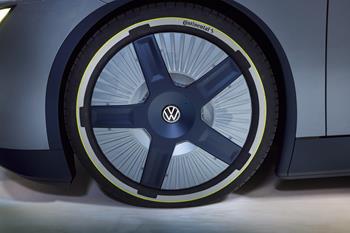
The ID. Polo production car, upon which the Mission Efficiency is based, is already fitted with Continental’s EcoContact 7 as standard. For the record project, the two companies went a step further. Continental developed the tyre in close collaboration with Volkswagen’s vehicle and aerodynamics engineers. The teams worked closely together from a very early stage of development to optimise the tyre, vehicle and aerodynamics for maximum efficiency. The collaboration also extended to the vehicle’s design. The tyre’s colour-accented sidewall incorporates styling elements from the Mission Efficiency concept and contributes to the vehicle’s overall visual identity.
Three world records in one drive
During the record drive, the Mission Efficiency set three benchmarks: it became the world’s most aerodynamic near-production vehicle, with a drag coefficient (Cd) of 0.158; the most efficient four-seat electric vehicle in its class in a single drive under controlled conditions; and the most economical near-production four-seat electric vehicle on an officially documented long-distance drive under real-world conditions. These achievements were made possible by a vehicle shape optimised for aerodynamics from the outset, along with innovative solutions to improve airflow across all relevant areas of the vehicle. The record-breaking vehicle is largely based on production components from the ID. Polo, including its battery and drivetrain. The Mission Efficiency therefore demonstrates the efficiency gains that can be achieved through targeted improvements to existing electric-vehicle technologies – under real-world, long-distance driving conditions and beyond standardised test cycles.