By Stuart Johnston
- President of Ford Motor Company, Lee Iacocca (1970-1978), drove a Granada Perana V8 built by South Africa’s Basil Green in the mid-1970s
- The Mustang became the fastest-selling car ever launched, back in April 17, 1964
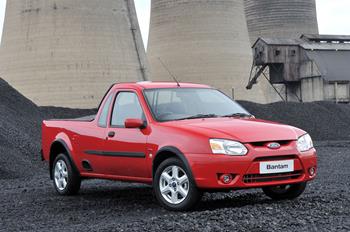
- The Ford Bantam half-ton pick-up was designed, engineered and built in South Africa, through all three generations, lasting from the 1980s until 2011
PRETORIA, SOUTH AFRICA, 20 September 2024 – When the President of Ford Motor Company asks you to deliver one of your products to him as soon as possible to his headquarters in Dearborn, Michigan, you deliver. Especially when Ford is your biggest client and your name has been associated with the company in the same way that coffee has been to cream, or peanut butter to jam.
Lee Iacocca, in his role as global president from 1970 to 1978, had visited South Africa in the mid-1970s. As a courtesy, Basil Green, creator of the famous Perana Fords, lent him a Granada Perana V8. Iacocca was so taken with the car, the only V8 Granada model in the world, that he told Green he wanted one for his personal use back in the US.
Green and his team meticulously prepared the Granada and duly airfreighted the car to Michigan. So he was shocked to receive a telex from Iacocca a few days later, asking if Green wasn’t aware that Americans drove on the right-hand side of the road, and cars had the steering wheel on the left?
A flurry of international phone calls resulted in Green sourcing a left-hand-drive Granada from Germany, then working day and night to install a V8 engine into the LHD model, which needed quick-rethinking for some of the components. But Mr Iacocca got his Granada, and thus the South African Perana name gained a foothold in the U.S.
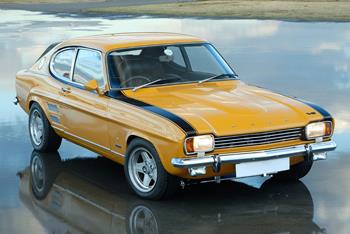
The now legendary Capri Perana V8 is today revered all over the world as one of the most collectable classics of the 1970s. But the Granada Perana, which followed the Capri into production in 1973 to 1976, is an almost forgotten member of the Perana stable. Yet in a 1991 interview, Basil Green stated that his company built twice as many Granada Peranas as they did with Capri, which totalled a little over 400 examples from mid-1970 to 1973.
What makes the total of nearly 1 000 Granada Perana V8s built even more astounding is it was launched just a few months before the global fuel crises, which made all V8-engined cars a suspect, even an anti-social purchasing decision. The answer to this anomaly lies in the fact that the Granada Perana was seen as a super luxury car and not a performance car, and most of its customers used them for towing caravans.
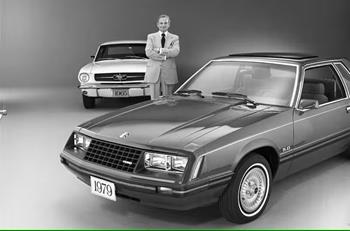
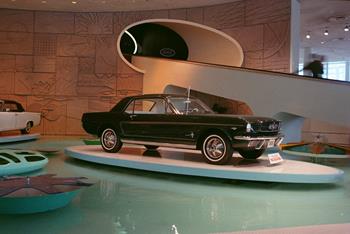
Lee Iacocca, prior to his ascending to the role of president at Ford, was famous as the father of the Ford Mustang. It was his vision that led to Ford identifying an untapped market for young drivers (and notably young females) who wanted a sporty car that was nevertheless practical and affordable. The result was that the Mustang became the fastest-selling car ever launched, back on April 17, 1964.
Such was the frenzy created by the new Ford that customers swamped dealers all over America hoping to be first on the customer list. It is recorded that at a Texas dealership, 15 people placed bids on the only showroom model, and the winner slept in his new Mustang at the dealership overnight, until his cheque cleared the following day.
The Mustang launch was a key component of Ford’s Total Performance programme, launched a few years earlier in 1962, to morph the Ford brand from solidity to excitement. This strategy included Ford supporting motorsport on a global basis, and creating some of the most exciting cars and engines ever produced. The Ford Cosworth DFV V8 engine became the most widely used engine in Formula 1, and from 1967 to 1985 it scored a total of 155 Grand Prix victories in a variety of cars.
In other forms of motorsport, rallies and saloon car racing, Ford was similarly dominant. In 1964 Jim Clark won the British Saloon Car Championship in a Lotus Cortina, and back home in South Africa Koos Swanepoel did likewise in the South African Saloon Car Championship.
In fact, Ford won the 1964, 1965, 1966, 1967, 1969 and 1970 South African Saloon Car Championships, and followed this up with regional production car championships in 1971 and 1972.
Henry Ford, founder of the great company that bears his name, would have approved. Before he established the company, he raced one of the first cars he built, and won, at a contest in Grosse Point Racecourse, Michigan, in 1901. In 1904 he set a world land speed record on a frozen lake, of 147 km/h. Henry believed that racing would bring him the most publicity for the least capital outlay, and he was proved correct, as investors stepped in to establish him as a manufacturer.
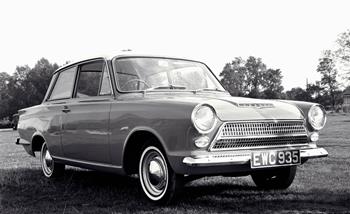
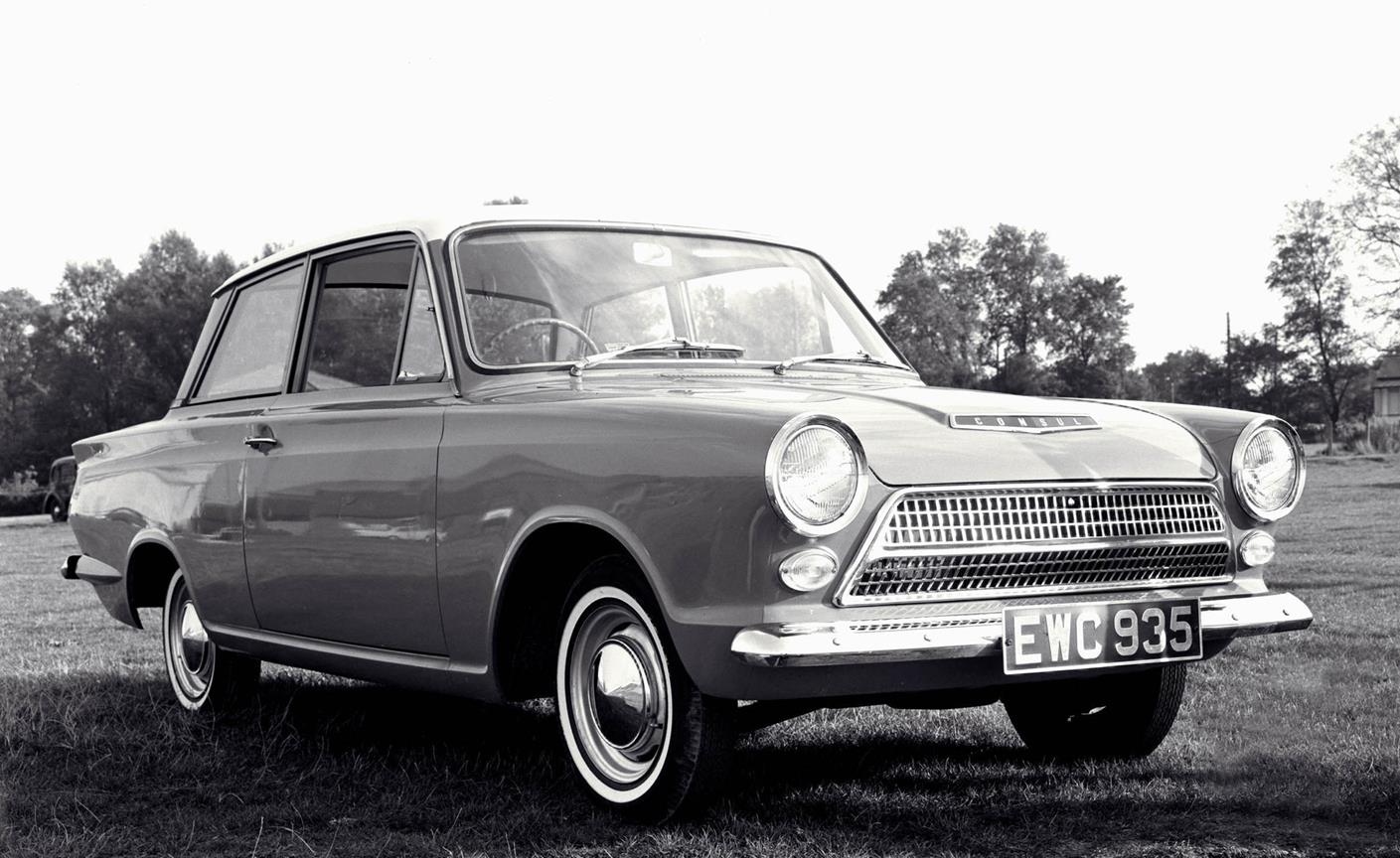
But conversely, Henry built cars for ordinary folk and his company never lost sight of this fact. The Ford Cortina, built in Dagenham, England, was the car that established Ford as a top seller in Britain, and it did likewise in South Africa after its 1962 launch. It is not widely known that the chief designer of the original Cortina was an American, Roy Brown Jr, whose signature was the three-segment circular taillights on the original car. After the 1969 Woodstock music festival, these would forever be known as “peace sign” tail lights.
Ford South Africa’s biggest contribution to Cortina history was to design and build a pick-up version of the third-generation Cortina in the 1970s that was so successful it was exported to England.
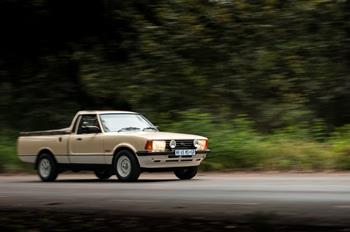
A lesser-known achievement is that the Ford Bantam half-ton pick-up was also designed, engineered and built in South Africa, through all three generations, lasting from the 1980s until 2011. The Bantam was essentially a workhorse variant of the first front-wheel-drive Ford Escort in its 1980s rendition, and it then used the Ford Laser as its base-model in the early 1990s, followed by the fifth-generation Ford Fiesta. It was the only Ford plant to build this remarkable little pick-up.
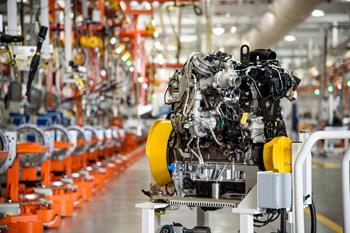
The most popular engine powering the final rendition of the Bantam pick-up was the RoCam, single-overhead camshaft four-cylinder engine, displacing either 1.3-litres or 1.6-litres. These engines were manufactured by Ford’s Struandale Engine Plant in Gqeberha.
The Bantam was discontinued to make way for the impressive export program established for the larger one-tonner Ford Ranger pick-up in 2011. The Struandale Engine Plant then switched to building Ranger turbodiesel engines in four-cylinder and five-cylinder configurations, and established an impressive export programme for both complete engines and components.
The Struandale plant today now also builds the new impressive 3.0-litre V6 turbodiesel engine that powers the top versions of the latest-generation Ranger.
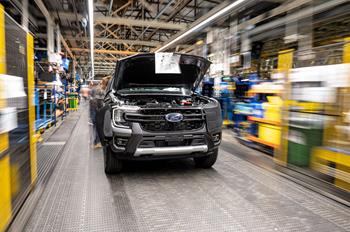
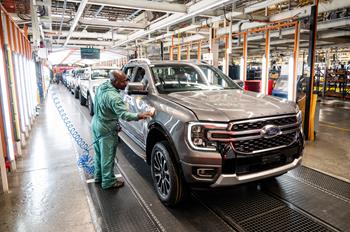
And the South African Ford chassis engineers are still achieving worldwide recognition. The Ford plant in Silverton, near Pretoria, is the only Ranger plant in the Ford global network that constructs its own chassis for the Ranger. The new Ranger has been widely praised for its chassis rigidity and durability by journalists and customers alike, enabling Ford’s engineers to develop compliant suspension systems that give an excellent combination of ride quality and control of wheel movement over road irregularities.
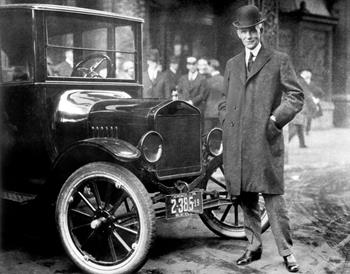
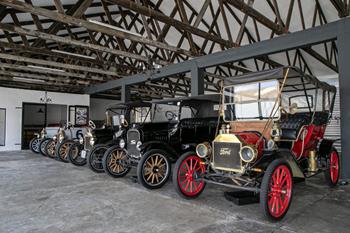
- Finally, a few lesser-known facts about Henry Ford and his Model T: When the Model T appeared in 1908, it cost 850 US dollars. Henry Ford then introduced a progressive price reduction policy as the car’s popularity increased, so the price reduced from US$850 in 1910 to under $300 in 1927.
- Production ramped up massively in the first years of Model T production. In the first full year of production in 1909, 10 807 cars were built. By 1912, 78 440 cars were produced, and by 1914 production numbered 248 307. By 1925, the million mark for a single year had been passed, with 1 256 859 Model Ts sold. When production ended after 19 years in May 1927, a total of over 15 million had been built.
- In South Africa, Ford sales performance was also impressive. From 1904 to 1923 Fords were imported, mostly from Canada. They were so popular that by 1925 Fords on South African roads numbered over 18 000 cars, while the next-best competitor had 6 798 registered sales (Chevrolet).
- Due to this demand, in 1923 it was decided to assemble Fords in South Africa, making it the first manufacturer to set up vehicle assembly operations in the country. Ford Motor Company of South Africa was formally established in November 1923, with its local operations starting out in a converted wool store in Port Elizabeth.
- For the first full year of Port Elizabeth Model T assembly in 1924, production numbered 1 446 units and by 1929 some 3 876 cars and 1 422 commercial vehicles had been built in that year. By this stage production had switched from the Model T to the Model A. Henry Ford paid his line workers extremely well, famously ramping up their wages to an unheard-of-at-the-time five dollars a day. Shortly after this he visited a barber, who did not recognise him, and asked whether the client in his chair knew if it was true that Ford was now paying his workers five dollars a day. “Oh yes,” said Ford. “It’s true. I happen to work there”.
# # #
Read the latest news from Ford South Africa by visiting the Newsroom: