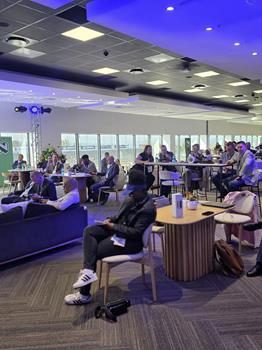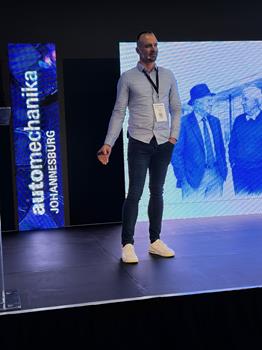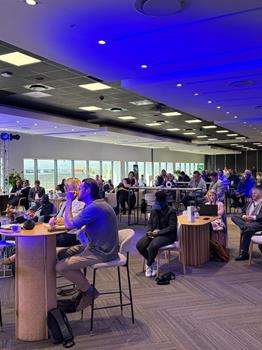
South Africa's automotive aftermarket is entering a period of mounting complexity, driven by shifting technology, evolving consumer expectations and a wave of new entrants disrupting traditional business models. This was the central theme explored at Automechanika Johannesburg's latest CEO Breakfast, hosted by Messe Frankfurt South Africa and Nedbank at the Kyalami Grand Prix Circuit, held alongside the 9th Festival of Motoring.
Setting the tone for the discussion, programme director Andile Africa, CEO of the Automotive Industry Development Centre (AIDC), noted that these converging forces — technology, changing consumer behaviour and new market players — are fundamentally reshaping how the aftermarket operates.
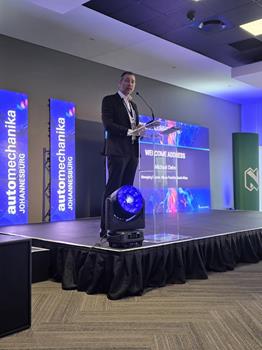
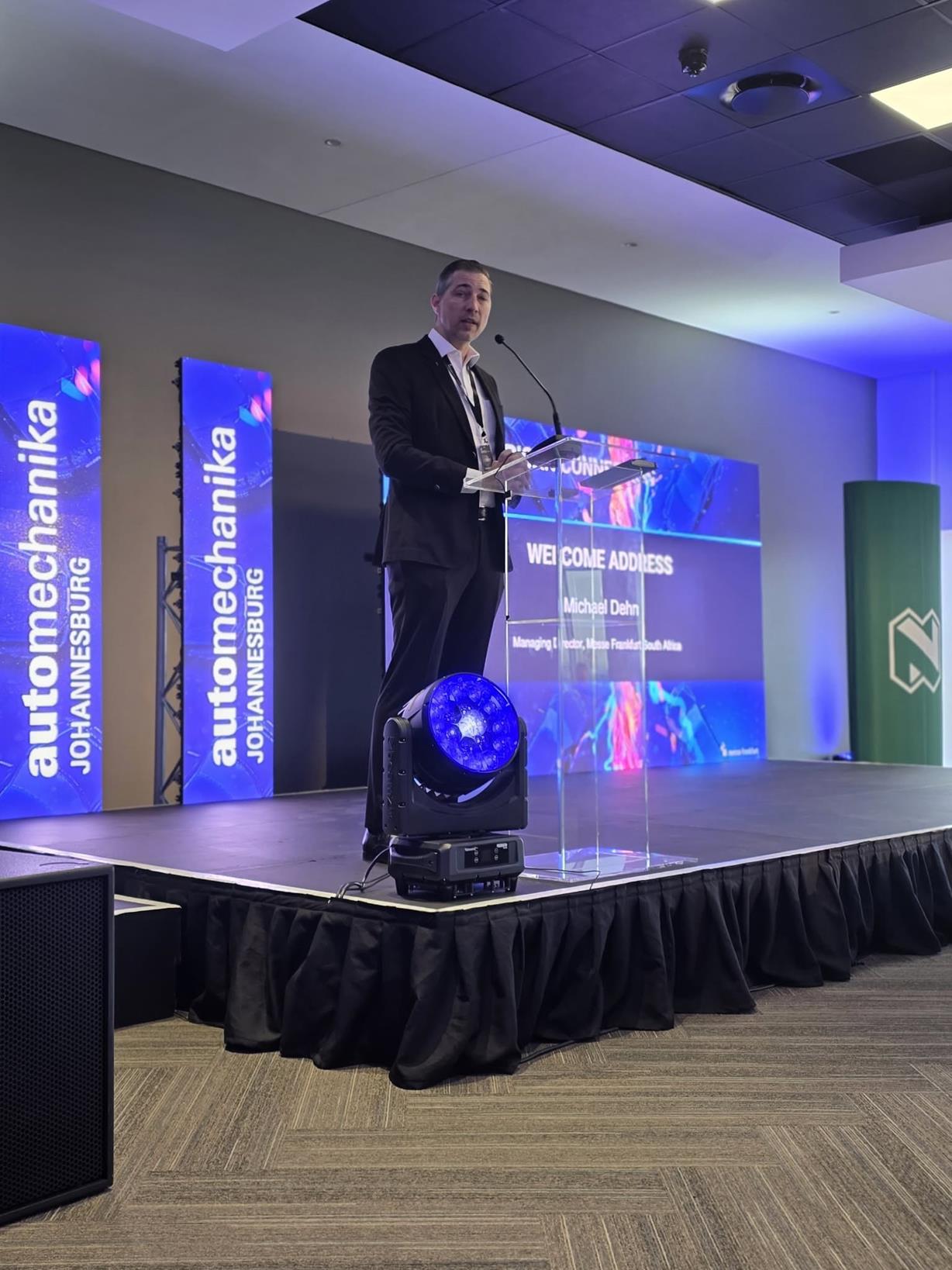
Welcoming delegates, Michael Dehn, Managing Director of Messe Frankfurt South Africa, accurately described the connection between the Festival of Motoring and Automechanika Johannesburg. “The Festival of Motoring is the heartbeat of the market, and Automechanika is the backbone. This is where the two meet,” he explained.
Speakers at the breakfast examined the trends reshaping South Africa’s automotive aftermarket, providing insights into vehicle affordability, parts localisation, artificial intelligence (AI) and the country's current and future economic outlook.
Affordability, localisation and changing customer behaviour
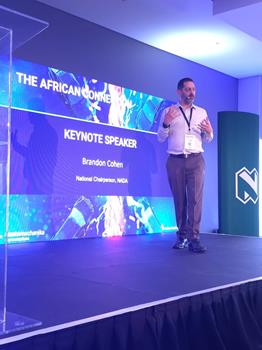
Brandon Cohen, National Chairperson of the National Automobile Dealers Association (NADA), said affordability extends beyond a vehicle’s advertised price. Buyers increasingly consider fuel consumption, insurance, tracking requirements, finance periods, maintenance, reliability, parts availability and dealer reach before committing. “Longer finance terms and ownership cycles are ageing South Africa’s vehicle parc, creating opportunities for workshops and parts suppliers while intensifying pressure on household budgets,” he explained.
“Whenever you look at the consumer journey, it always starts with total cost of ownership.” Cohen stressed that dealers must adapt their models, control overheads and compete on lifetime value rather than purchase price alone.
Duane Newman, Partner at EY, outlined the potential to expand local production of aftermarket components for South Africa. “Lead-acid batteries, automotive glass and brake pads offer the strongest localisation opportunities, based on demand, replacement frequency and manufacturing potential.
“However, lower-cost imports, limited scale, investment requirements, inputs and uneven standards enforcement continue to constrain producers.” Newman called for certification, recycling and feedstock systems, improved export access, coordinated demand and incentives that support manufacturers serving the independent aftermarket.
“We need to coordinate action across industry, government, and broader institutions to unlock localisation’s full potential,” he clarified.
Technology, resilience and a shared road ahead
Werner Stucky, CEO of Stubber, urged automotive industry leaders to see AI as an operational capability rather than an information technology project. He described autonomous “AI employees” that are able to manage customer conversations, sales enquiries, finance applications, service bookings, roadside assistance and back-office workflows consistently—and at scale.
“Leadership, process redesign and organisational readiness now matter more than access to technology. Businesses that deploy AI effectively can reduce response times, improve customer experience and extend service capacity without sacrificing diligence,” he stated.
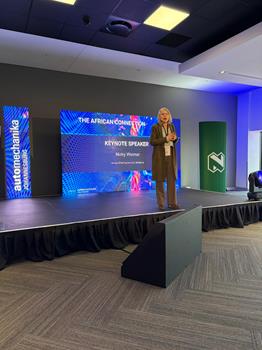
Nicky Weimar, Group Chief Economist at Nedbank, presented a nuanced economic outlook for the automotive sector. She said producers and exporters face elevated domestic operating costs, shifting global trade patterns, fierce competition from lower-cost imports and currency pressures. Domestic vehicle demand, she argued, remains comparatively resilient, supported by real income growth and appetite for credit, although momentum may moderate into 2027.
“Inflation, fuel prices, energy-market disruption and possible interest-rate movements are risks for businesses and consumers. It remains a nuanced story, difficult for producers and exporters facing many challenges,” she said, while stressing that domestic demand provides a counterpoint for South Africa’s automotive value chain.
“Messe Frankfurt South Africa invites manufacturers, distributors, workshops, dealers, service providers and automotive professionals to attend Automechanika Johannesburg at Gallagher Convention Centre from 27 to 29 October 2026,” concluded Tracy Gounden, Business Development & Portfolio Director: Messe Frankfurt South Africa.
“The trade fair will provide a platform to continue these vital conversations, discover innovations and develop the practical partnerships needed for a more competitive, connected and resilient African automotive aftermarket.”
For more information about exhibiting Automechanika Johannesburg 2026, please visit www.automechanikasa.co.za or contact Tracy Gounden at tracy.gounden@za.messefrankfurt.com
Links to websites:
https://automechanika.za.messefrankfurt.com/johannesburg/en.html
Background information on Messe Frankfurt
www.messefrankfurt.com/background-information
Sustainability at Messe Frankfurt